Beauty Shots
A collection of renders, created by playing around with Blender and results from our papers.
2025
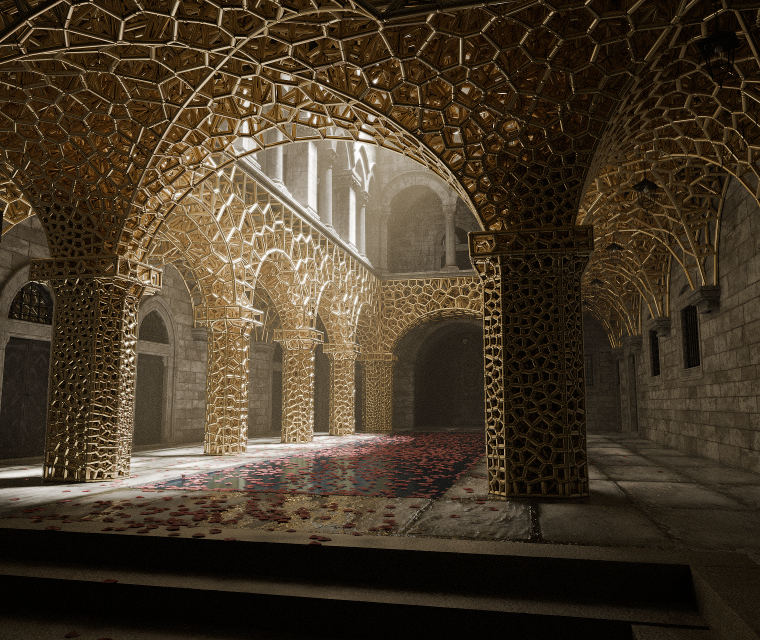
Lightweight design structures minimize material use, thus lowering energy consumption during operation. In our paper, we present a 3D material deposition strategy, based on a stress-adaptive Voronoi diagram. Site density is increased in regions of higher stress and reduced in less critical areas. The result is an efficient distribution of the constrained material budget (in this example 50 % of the solid structure), ensuring optimal mechanical performance. For this illustration, we modified the Sponza scene, replacing all load-bearing structures on the ground floor with our custom stress-optimized 3D Voronoi design. 🏆 1st Place in the CGF Cover Contest 2025, DOI: 10.1111/cgf.70003, Credit: Sponza Scene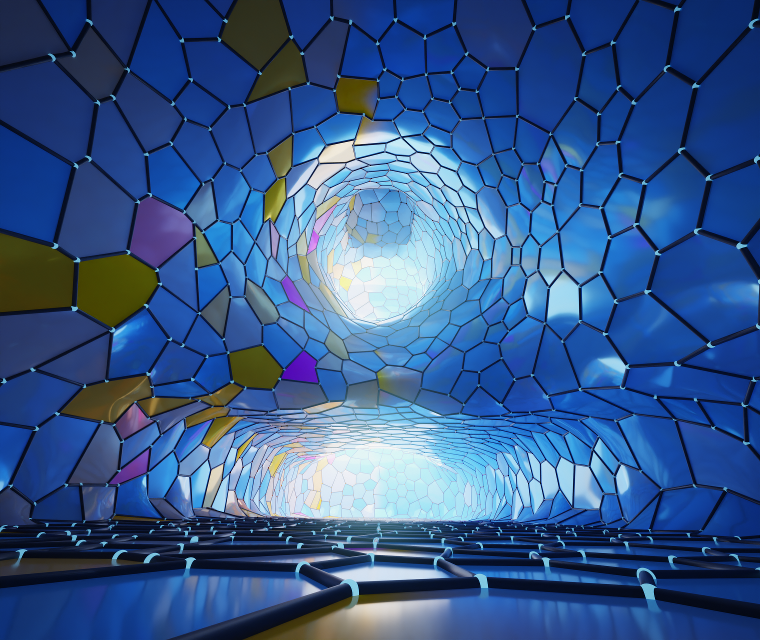
2024
This image shows the inside of the teaser of Polygon Laplacian Made Robust. It visualizes the condition numbers of individual polygon stiffness matrices. The mesh transitions from the input mesh to our result from left to right. The original mesh features disfigured polygons with alarming (yellow) or terrible (magenta) condition numbers. With our tailored smoothing algorithm, polygons become very regular and, combined with our improved polygon Laplacian, result in better condition numbers (blue) and improved robustness in computational simulation. 🏆 1st Place in the CGF Cover Contest 2024, DOI: 10.1111/cgf.15069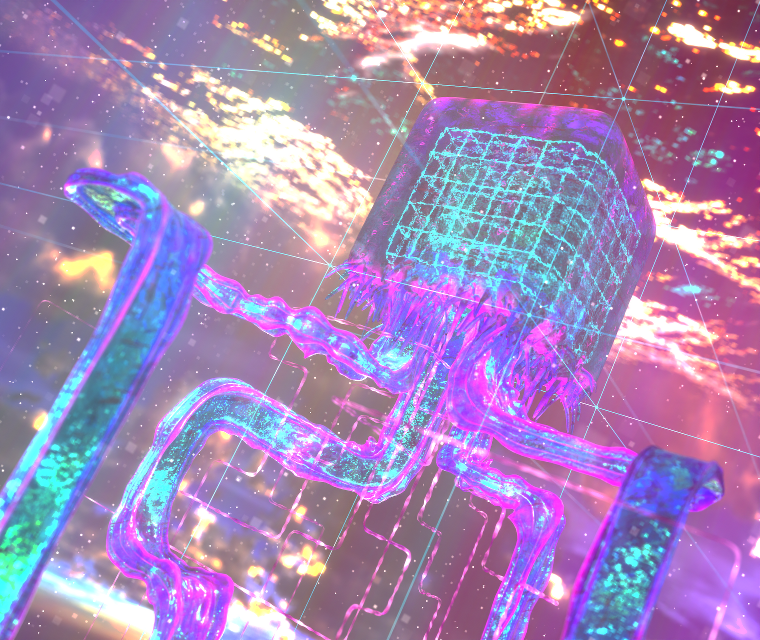
2023
Inspired by the box jellyfish, this image vividly captures the essence of a hex-meshing procedure. Transformed into a cubic marvel, the box jellyfish gracefully floats amidst integer grid lines. In the cubic spirit, appendages align with global coordinate axes and the virtual camera uses four blades for a square-shaped bokeh. Without post-processing, the image composition is completely realized in-camera with blender. 🏆 2nd Place in the CGF Cover Contest 2024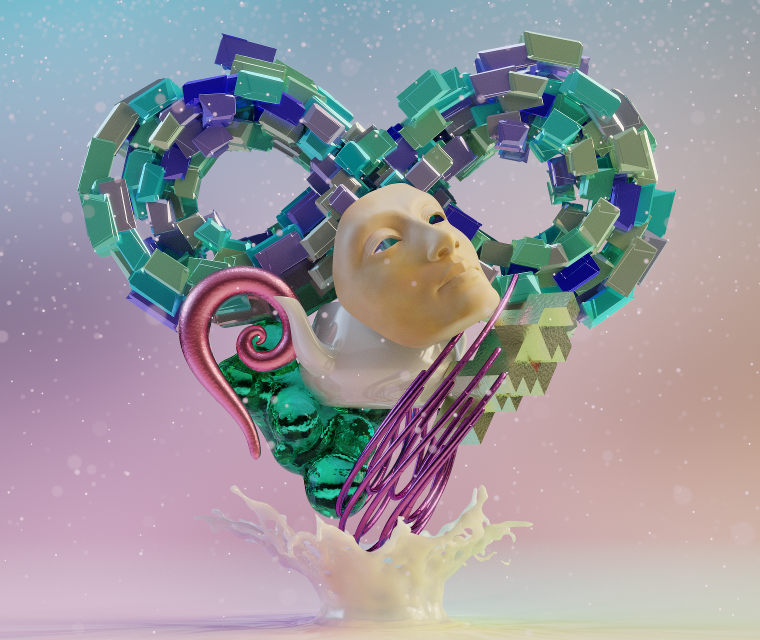
2022
This image features a multitude of computer graphics fundamentals like splines, polycubes, metaballs, the iconic modeled teapot, the scanned and reconstructed face of Nefertiti, subdivision surfaces, fluids, particle systems, procedural materials, image based rendering and maybe you can find some more. The exploding cells of the Lemniscate are again generated using the construction algorithm for L∞ Voronoi diagrams in 3D.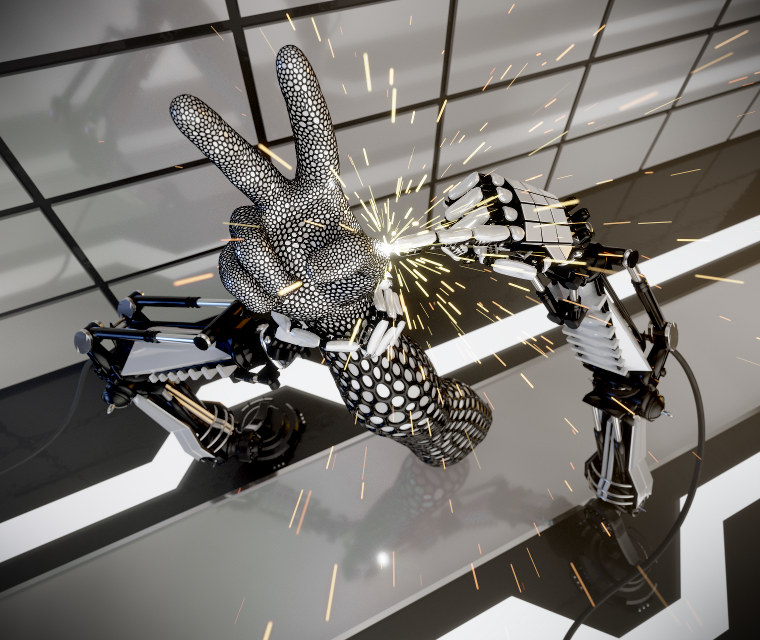
2021
This showcases a feature of the Be Water my Friend algorithm to seamlessly transition between mesh resolutions, here as a gradual coarsening from hand to arm. However, this image just envisions a futuristic manufacturing technique, i.e., to produce lightweight prostheses or orthopedic casts, based on patient-specific 3D scans. Here the dual of the actual triangle mesh output was used for illustration purpuses, creating the cell-like appeal.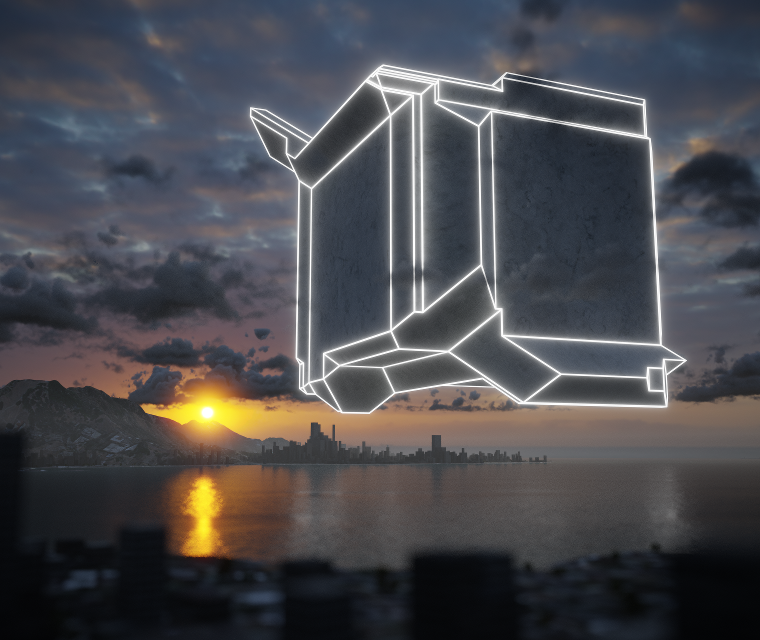
2021
Shown here is a single isolated cell, generated using L∞ Voronoi Diagrams in 2D and 3D construction algorithm. The cell is visualized as a giant monolith, floating above a completely procedurally generated bay-city landscape. Glowing edges aim to literally and visually highlight the alienesque nature of this non-convex polyhedral geometry.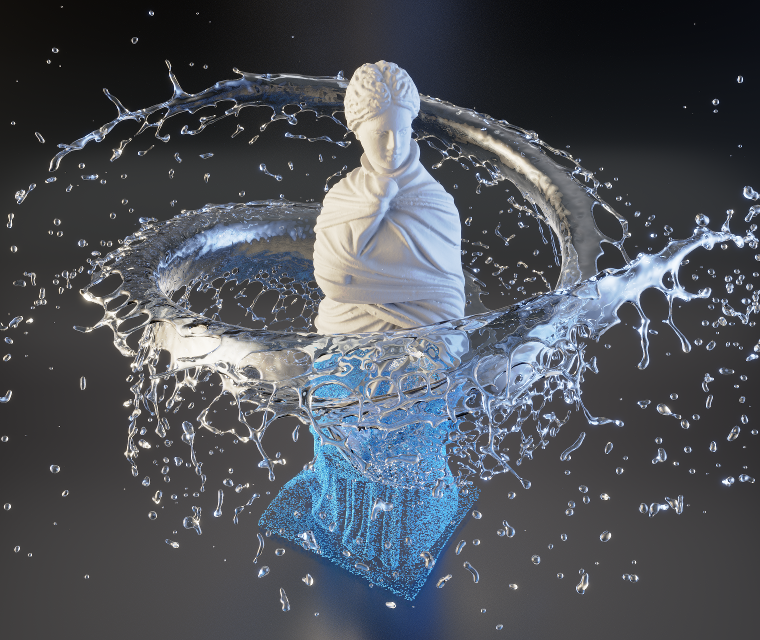
2020
Empty your mind. Be formless, shapeless, like water is a famous quote by Bruce Lee. It inspired the Be Water my Friend: Mesh Assimilation method to alter a mesh based on the ability of water to assimilate any given shape, if being poured into it. However, this rendering has virtually nothing in common with the procedure itself, it is merely a literal visualization of the concept idea: water materializing a point cloud. 🏆 2nd Place in the CGF Cover Contest 2021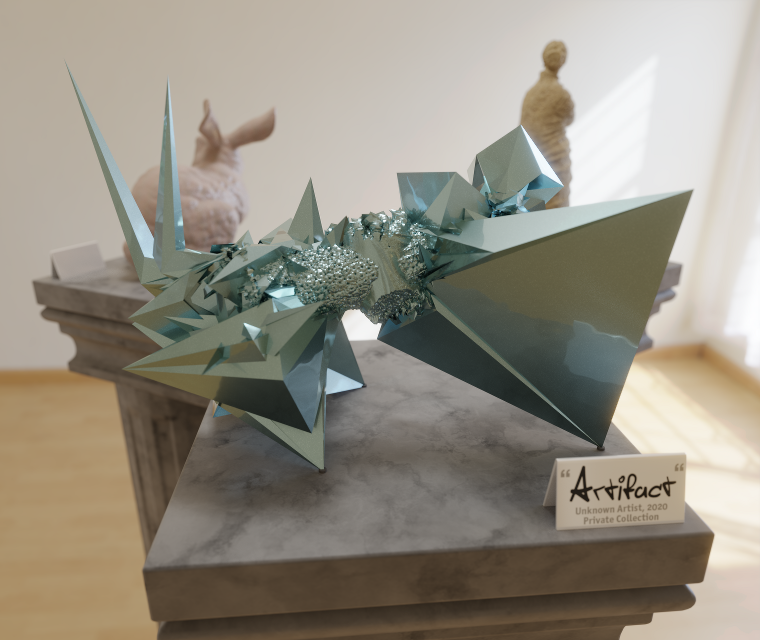
2020
This artifact was forged during the development of a meshing algorithm. By mistake, a started instance of the algorithm read a progress checkpoint from the wrong data directory. The situation escalated and the procedure terminated by creating this beautiful mess of a result. Artifact was chosen deliberately as the title due to its two meanings, on one hand it stands for an error, on the other hand it stands for an object of cultural interest.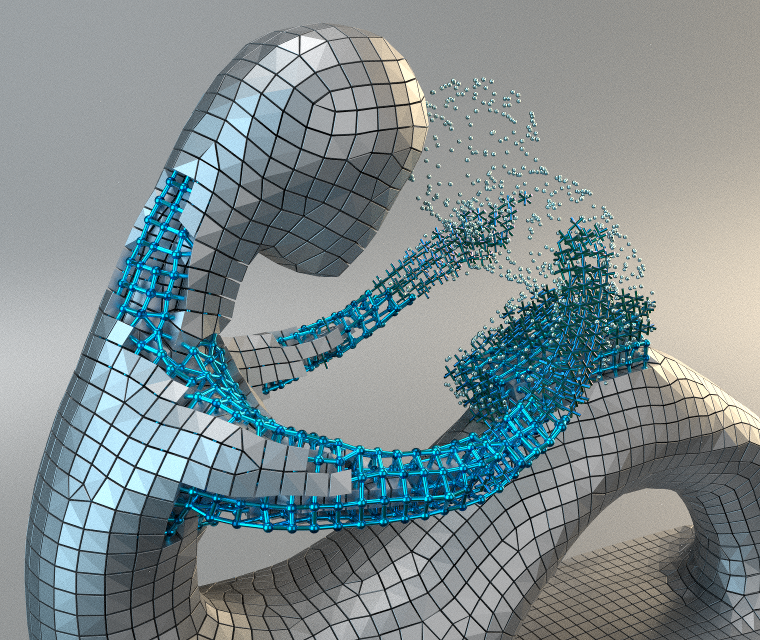
2019
This beauty-shot shows intermediate stages of the At-Most-Hexa Meshes pipeline, reconstructing a volume mesh from a point cloud input. The procedure relies on an orientation field and a neighborhood graph, both are visualized here in blue. 🏆 2nd Place in the CGF Cover Contest 2020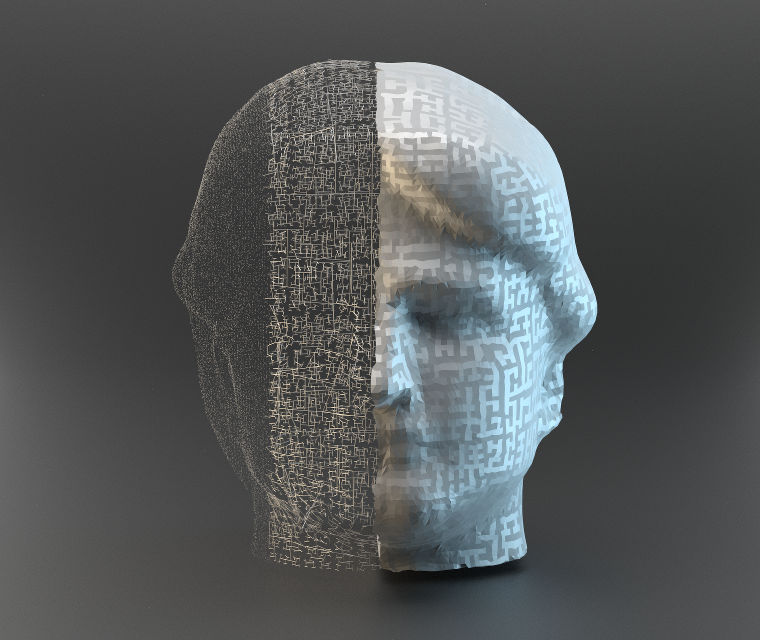
2018
This rendering illustrates stages of the Hierarchical Quad Meshing of 3D Scanned Surfaces method from left to right: The 3D scanned point cloud input, the kd-tree clustering surface samples and the final quad mesh resulting from the filled maze structure.Other Works
... exploring Blender's geometry nodes, modeling and animation features.2025
🌱 Sustainability Panel 🌱 Intro Visual, Eurographics2025
Eurographics Fast-Forward for Stress-Aligned Hexahedral Lattice Structures2024
Sustainability web-series @PharmacistsForFuture Postproduction2022
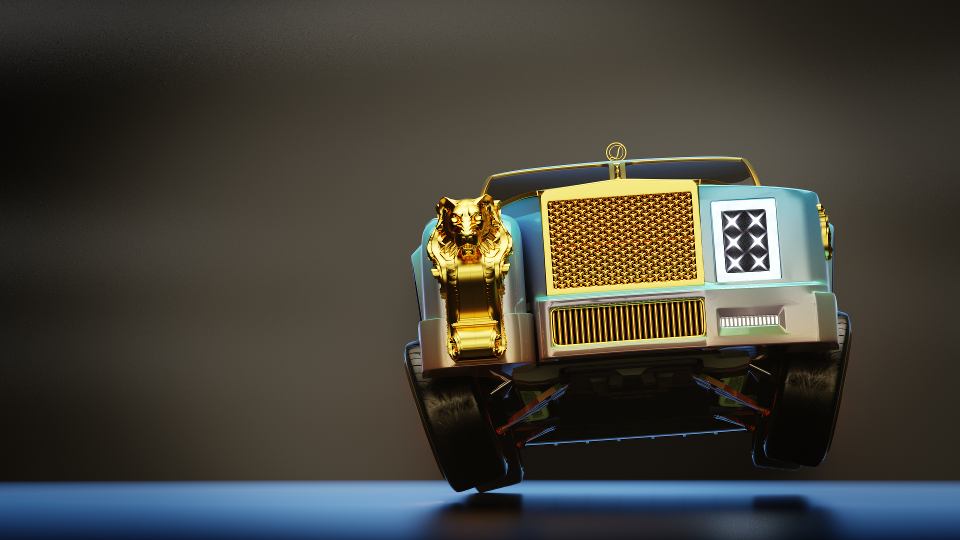
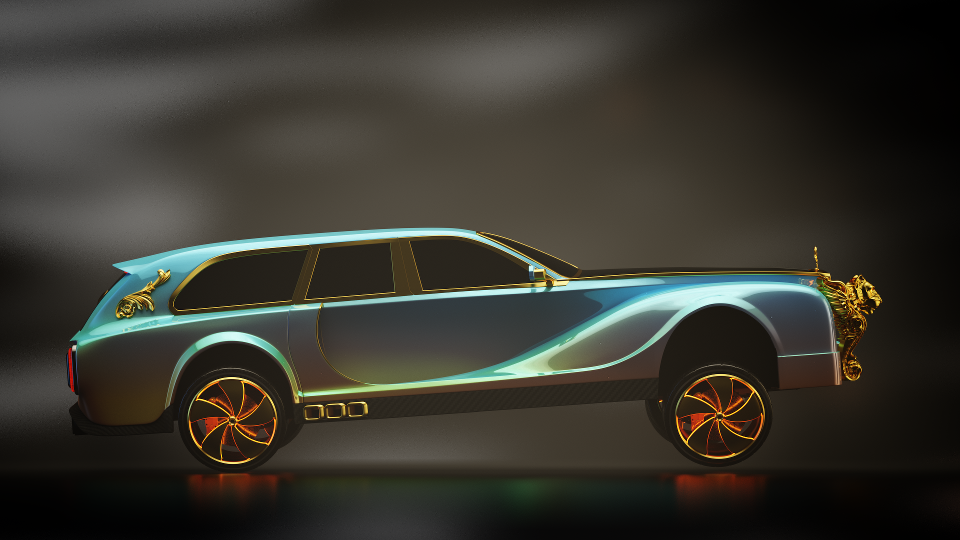
Wallpaper Set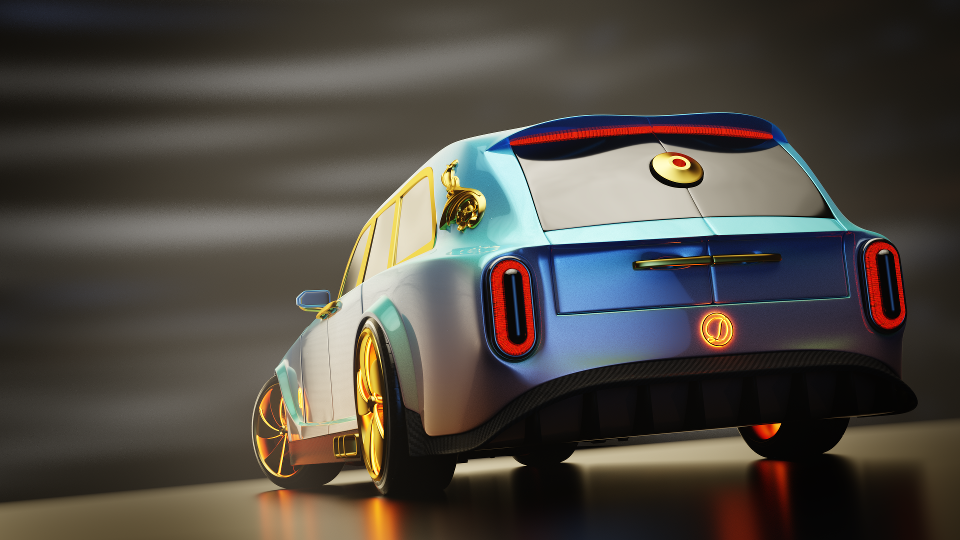
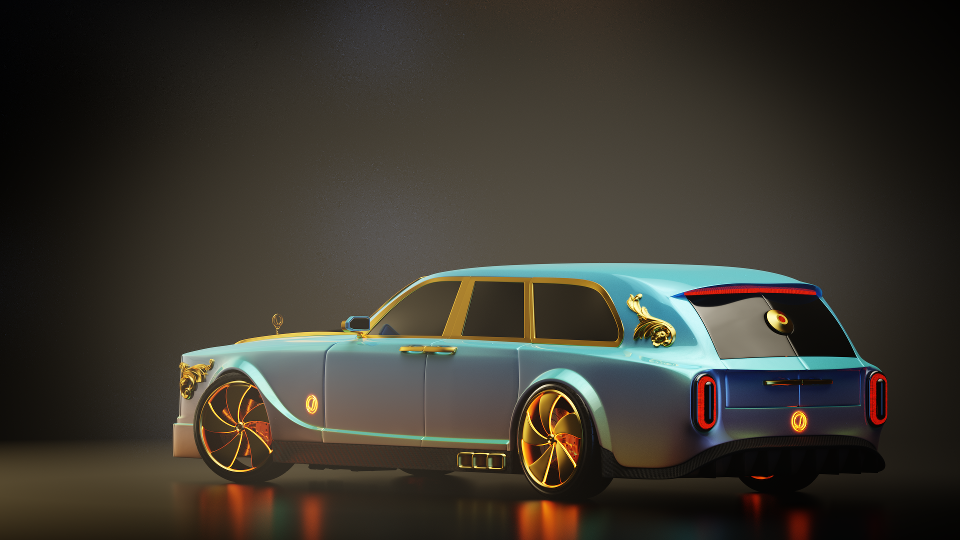
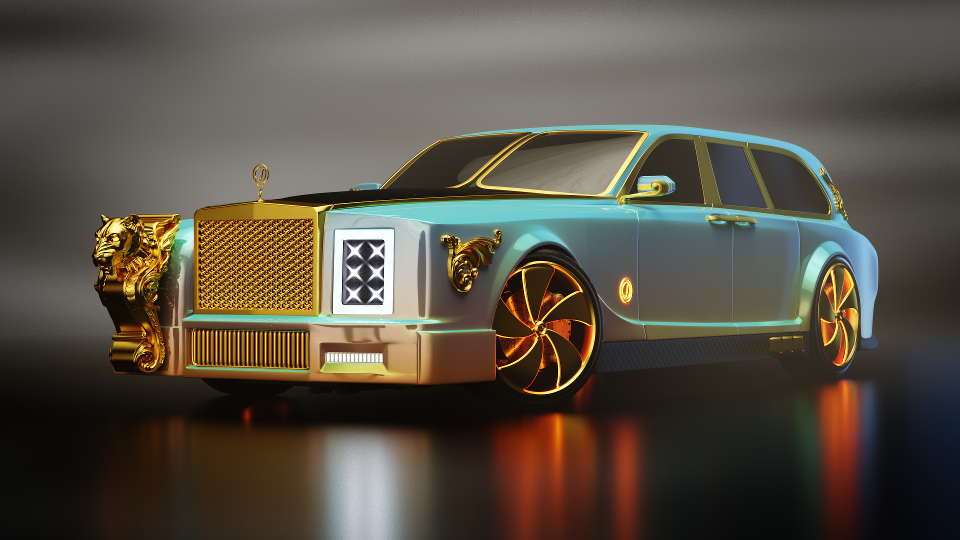
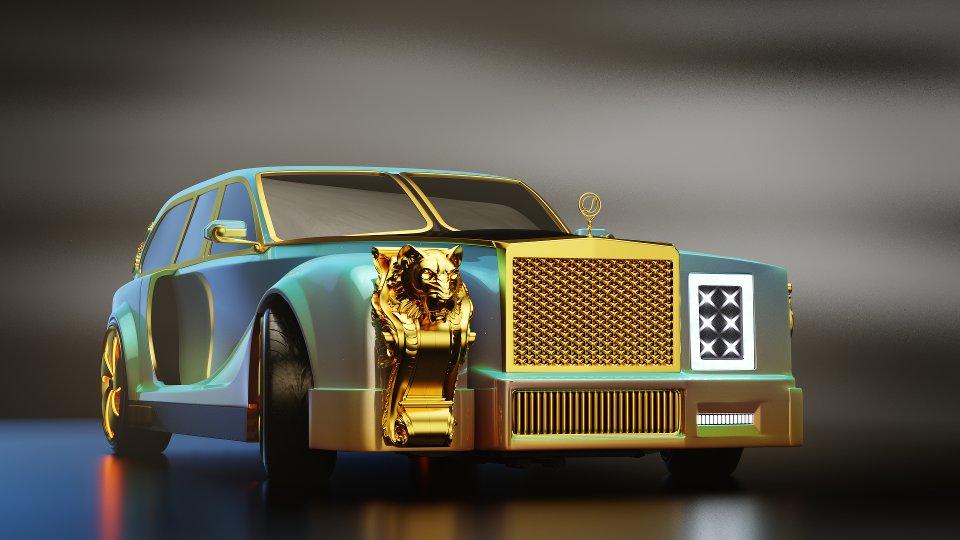

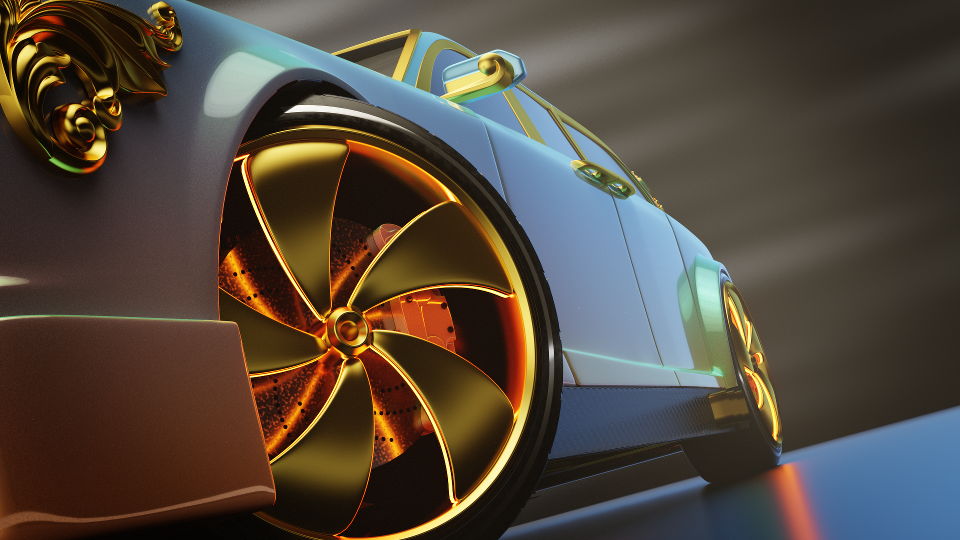
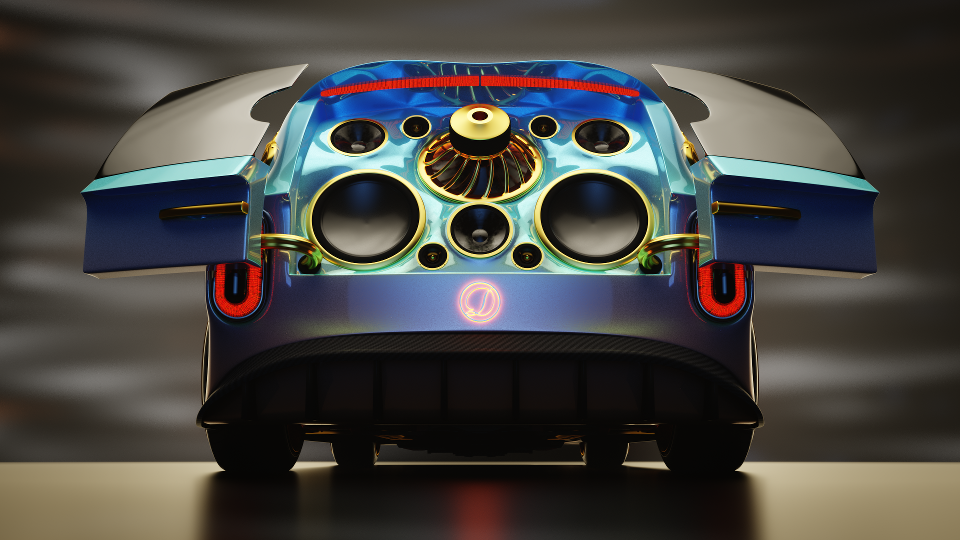
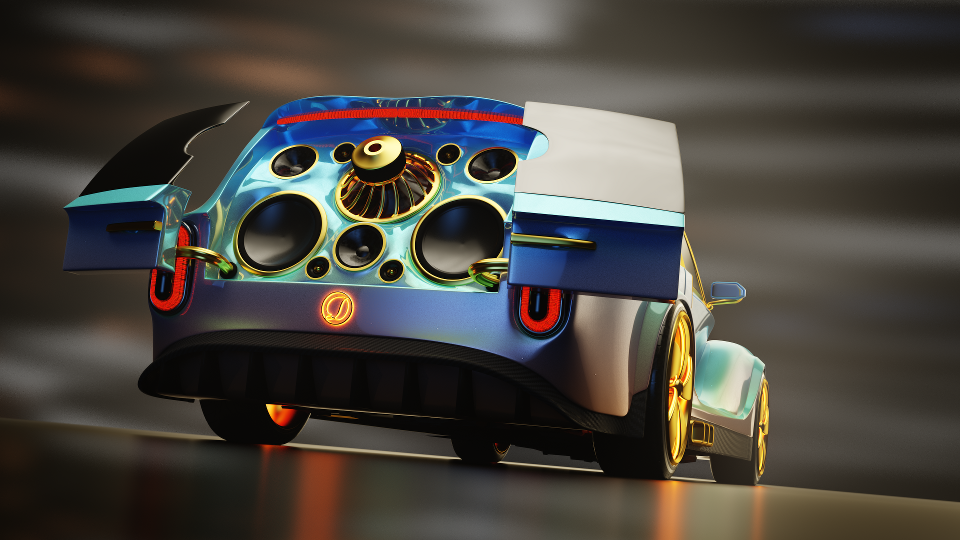
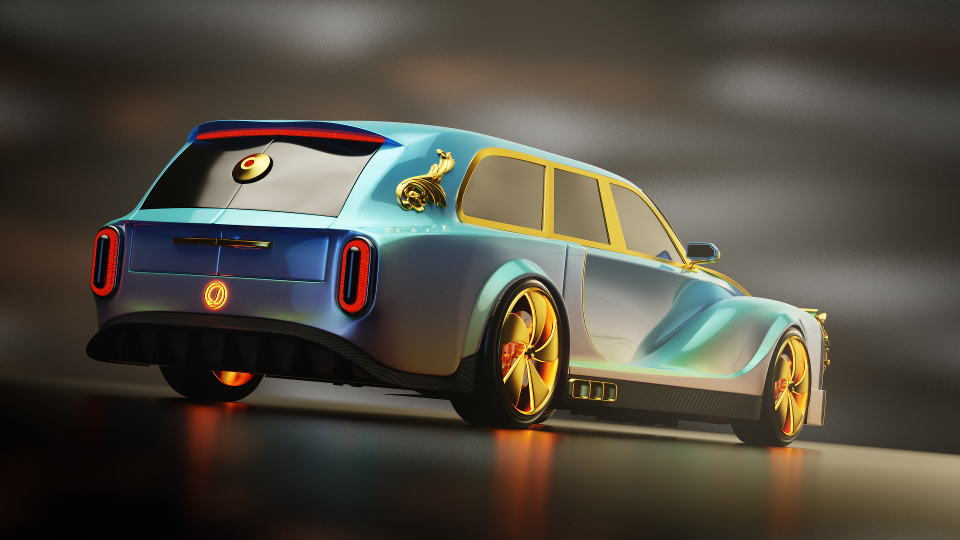
2020
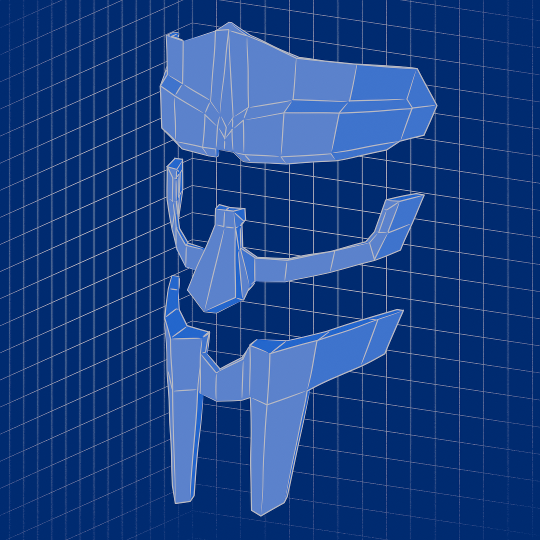
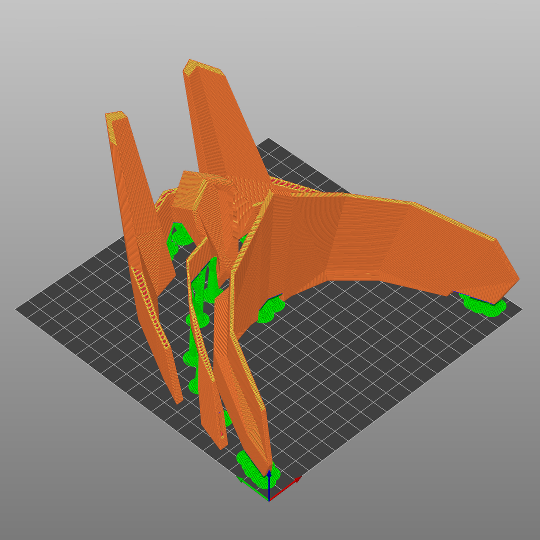
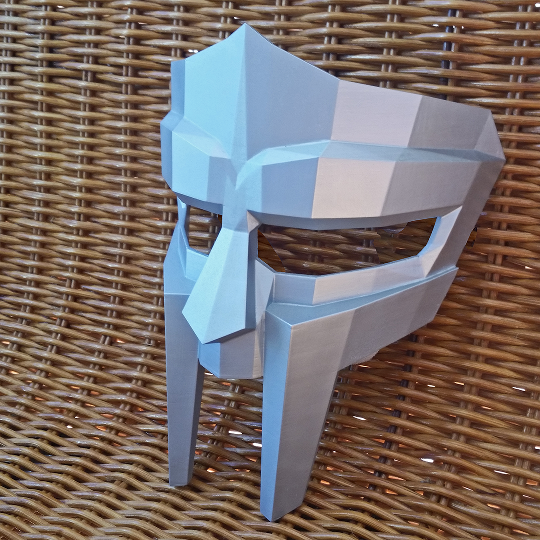
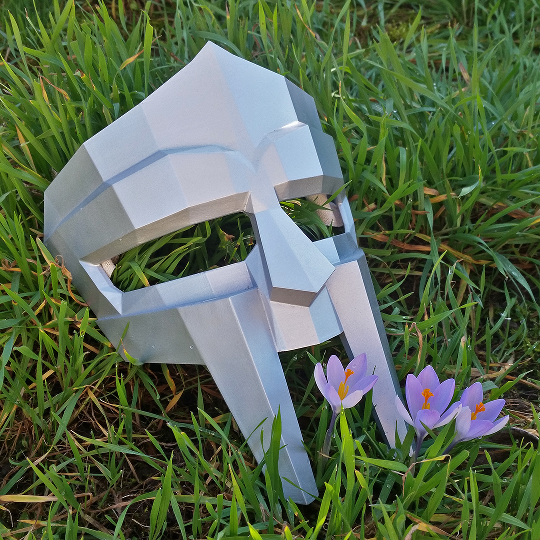
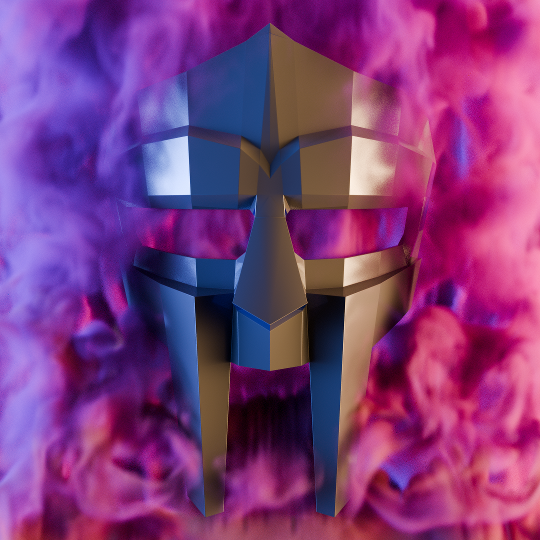
Low-Poly Gladiator Mask 3D print- and wearable (2025 visuals)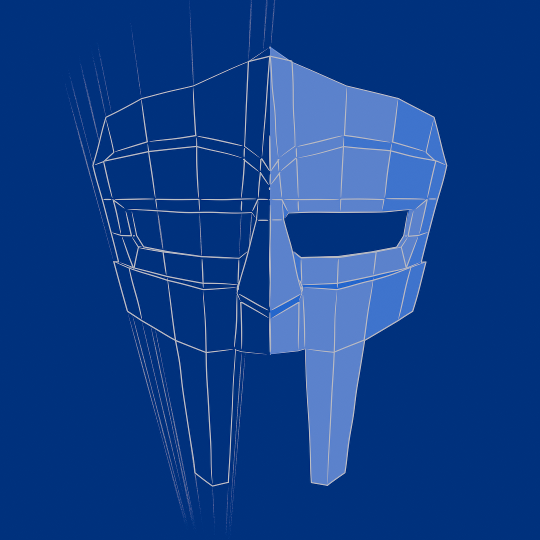

2020
Wallpaper Set